A Life Built Around Asking Why
There is a particular kind of person who does not wait to be asked. Loraine Holley is one of them.
There is a particular kind of person who does not wait to be asked. Loraine Holley is one of them.
A retired scientist with a PhD in physics and a career spanning biomedical engineering and medical physics, Loraine has spent the years since retirement doing what she has always done - noticing what is missing, gathering the right people, and quietly building something worth showing up for. She does it at Engadine Uniting Church, where she has become, in the words of Sue McKinnon, Church Council Chairperson, the 'driving force' behind almost every effective ministry the church has in the community.
Loraine grew up in country Queensland, in a farming community where church was simply part of life and curiosity came naturally. She was encouraged, against the prevailing expectations of her era, to continue her education, first by her teachers and then by her mother, and eventually found her way into physics. It suited her perfectly. "I enjoy asking why things work and how things work," she told me when we spoke recently, "and also how can you be creative in that problem solving." That pairing of rigorous curiosity and creative thinking has followed her out of the laboratory and into everything she has built since.
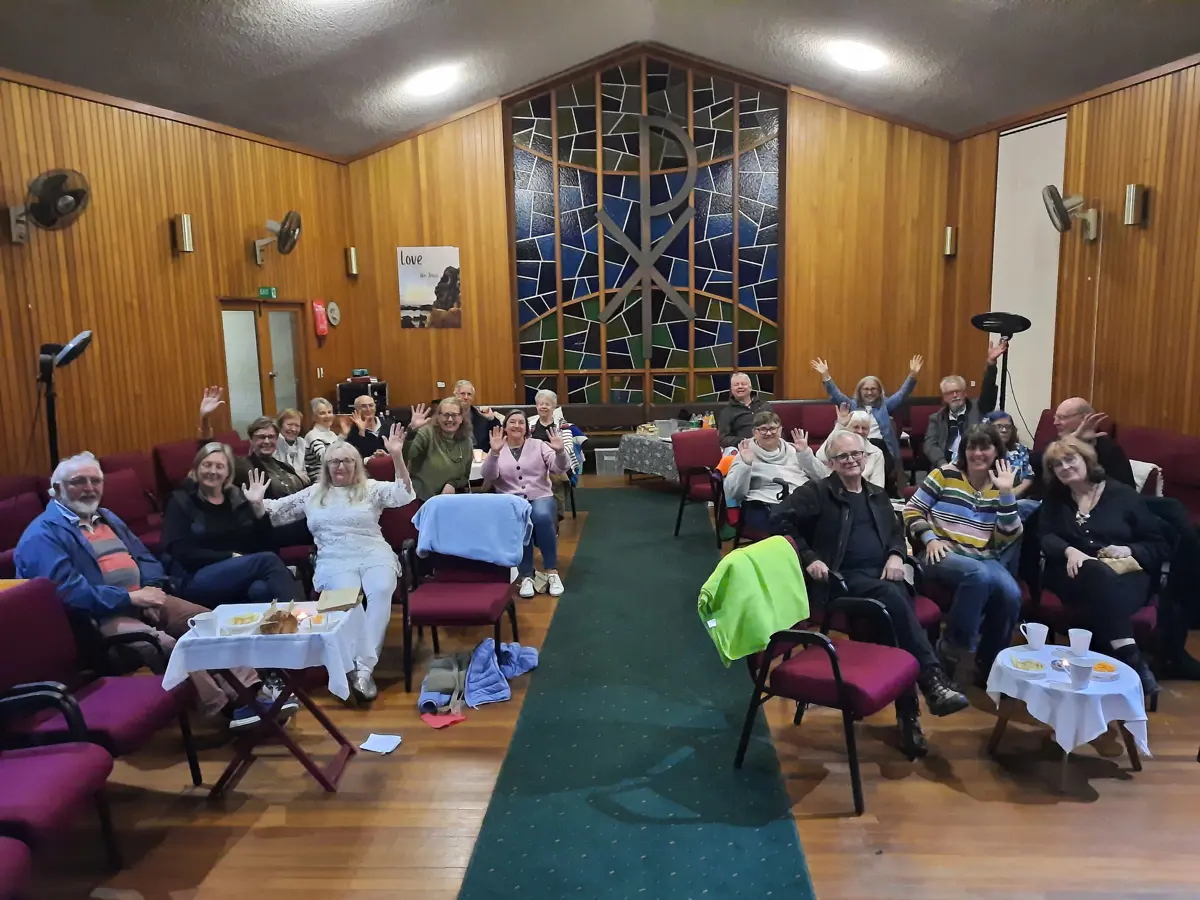
At Engadine, that has taken many shapes. There is a pop-up community choir, community film nights, and at the centre of much of it, the Eco Stitch and Sew Hub which is essentially a creative space where fabric waste finds a second life and where, as Loraine puts it, people who are not normally seen get to feel part of something bigger. She started it with a simple question she often returns to: how do you engage the community in something that matters, without making it feel like hard work?
The answer, she has found, is to start small and make the first thing tangible. The Hub's very first session involved everyone bringing a tea towel, dragging out their sewing machines, and making a tote bag. Simple enough that nobody felt out of their depth, satisfying enough that at the end of the afternoon there was something tangible to hold. Loraine had also hung tea towels around the room and arranged materials so the space felt like a small fair rather than a workshop. It was fun, and it was entirely on purpose.
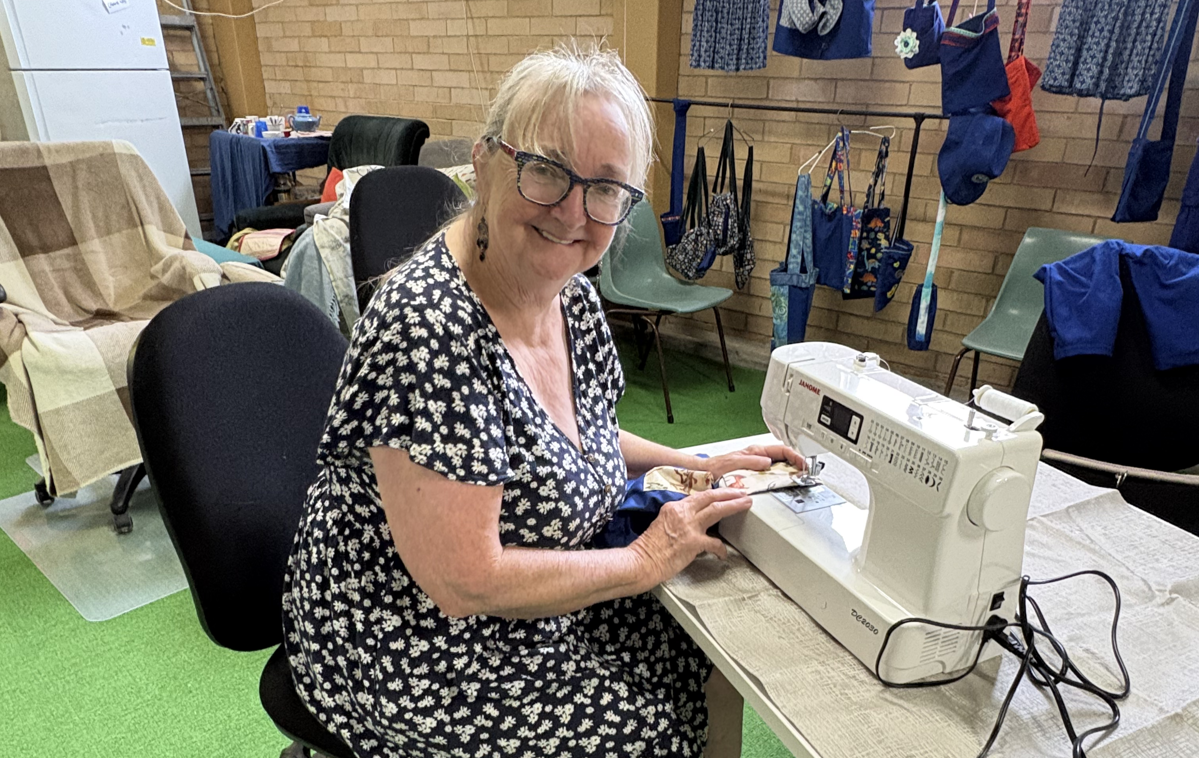
Loraine Holley at work at the Eco Stitch and Sew Hub, the space that was built from a tea towel and a question.
Engadine's involvement in Common Grace's climate scarf project began before the Hub, when Loraine encountered the initiative in a Zoom meeting. The project invites knitters to translate NASA global temperature data spanning more than a century into a knitted scarf. As a retired scientist, Loraine was immediately captured by it. She brought it to the congregation, asked who was in, and received an overwhelming response. Around twelve knitters have since produced fifteen scarves, each one gifted to a federal politician. Sue McKinnon described them as being "salted with tears," given to politicians with the prayer that they will act more effectively on climate to care for our present and future generations.
It was this work that caught the attention of Sutherland Shire Council, who nominated Engadine Uniting Church as one of three groups across the Shire to be featured in the Australian Museum's Future Now Makers film series (linked in the side bar). The film premiered at Cronulla earlier this year and is now part of the Future Now exhibition touring Australia. It is a significant recognition, and one that Loraine receives with the same warmth she brings to everything else.
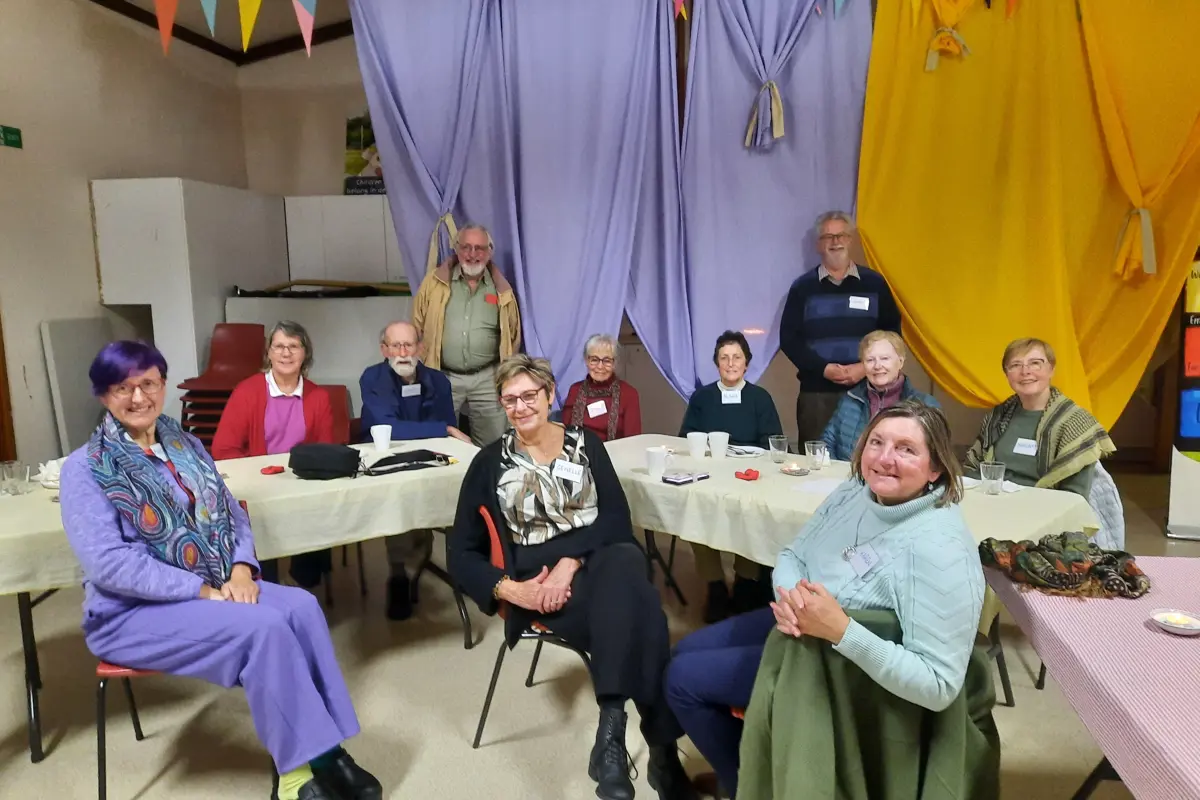
The book club, which has been running since 2022, grew from the same instinct that drives the Hub, the belief that before you can act well, you need to understand properly. When Anthony Albanese came to power and made clear that the Uluru Statement from the Heart would be central to his government's agenda, Loraine found herself confronted by the limits of her own knowledge on Aboriginal history and the issues behind the referendum. Her response was to propose a book club at a community meeting. Within weeks she had two sessions running, morning and evening, with around fifteen people attending.
What followed was not a neat curriculum but a living conversation, moving through Aboriginal history, the conflict in the Middle East, ecological philosophy, and most recently a novel on artificial intelligence and what it means to be human. Along the way the book club drew people of other faiths and people of no faith at all, who simply wanted to be part of what was happening
"That's fantastic. How can we use that?"
It is a question Loraine has been asking, and answering, for years. She is equally at ease talking about geopolitics, ecological philosophy, and the ethics of artificial intelligence as she is sitting beside someone at a sewing machine. What connects all of it, she says, is the people. "These wonderful people who you're getting to know much better. They're not just pew sitters."
None of what Loraine has built would exist without the people who chose to show up and keep showing up. She is the first to say so. The groups run because enough dedicated people have made them their own, ready to carry things forward with or without her at the front. That, perhaps, is the quiet measure of whether something has truly taken root.
Her vision for what a community can be is both simple and quietly ambitious. "We can have communities which engage, which allow people to be creative, to cry, to laugh, to make mistakes and to share love with one another, so that everyone feels safe."
The book club is still meeting. The sewing hub is still humming. And the Australian Museum thought what was happening at Engadine was worth putting on film.
That is not nothing. That is, in fact, quite a lot.
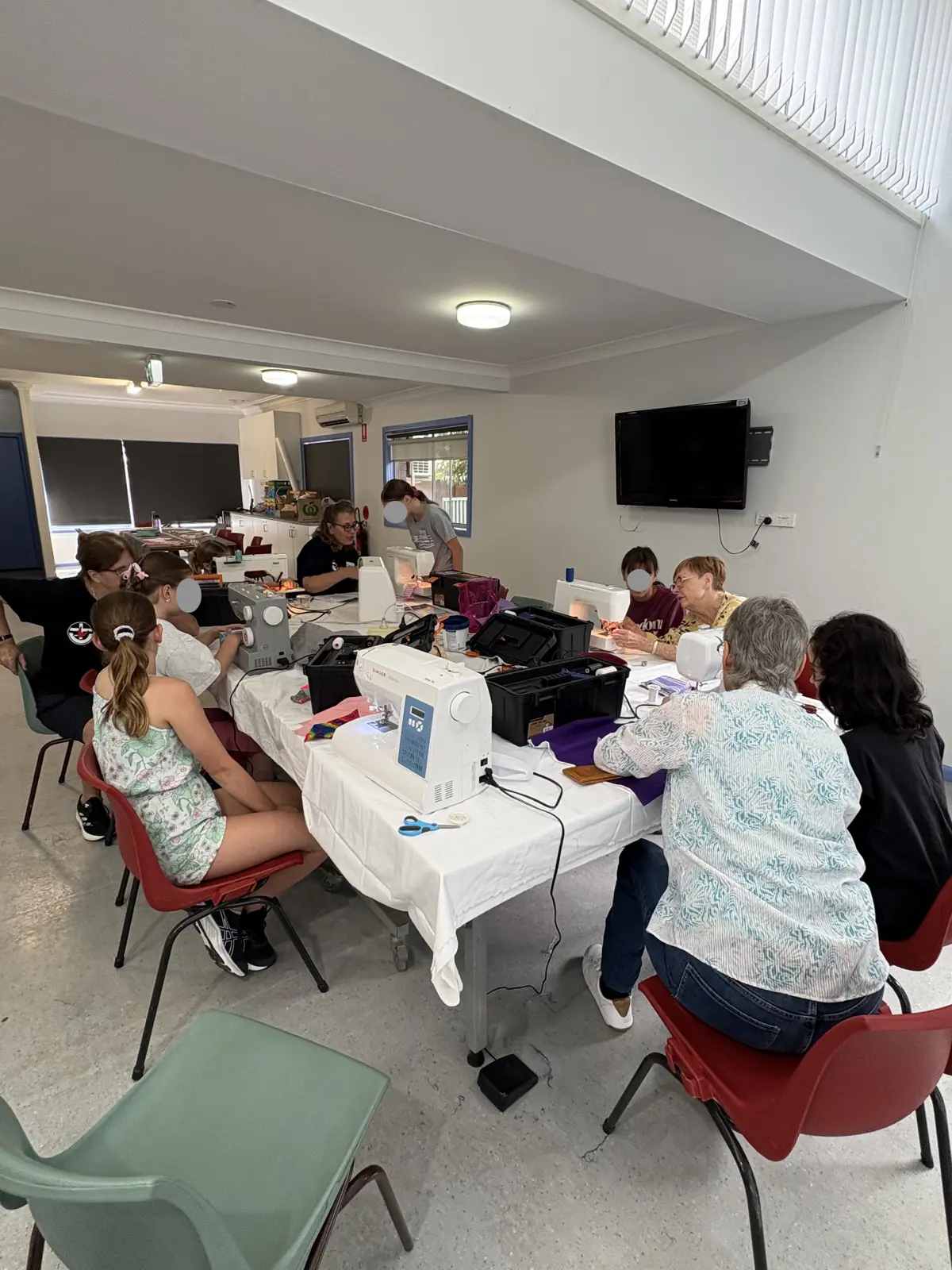
Sewing Workshop during school holidays
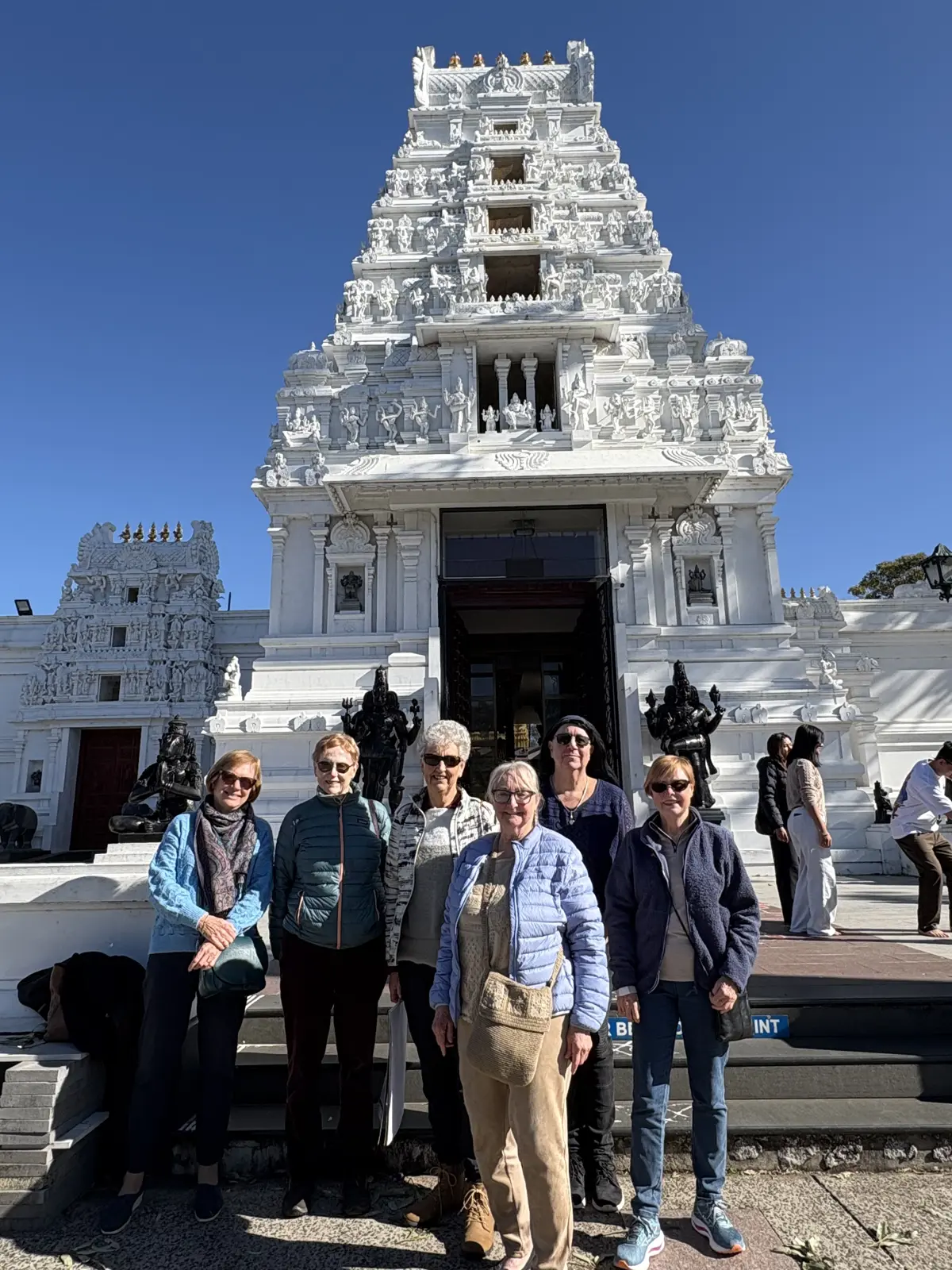
Book Club at Helensberg Hindu Temple
Film Night